The Supreme Court intervened to ensure a tragedy-struck widow received compensation from the Railways after a 20-year legal battle following her husband's death in a train accident.

Gitanjali Angmo, wife of climate activist Sonam Wangchuk, has filed a plea in the Supreme Court seeking his release from detention under the National Security Act. Wangchuk was detained following protests in Ladakh. The plea challenges his detention and alleges violations of due process.
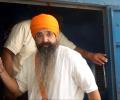
The Supreme Court has questioned the delay in the hanging of Balwant Singh Rajoana, convicted in the 1995 assassination of former Punjab CM Beant Singh, despite the Centre calling it a 'serious offence'.

A child with either of the parents belonging to a Scheduled Caste could be considered a member of the community if a proposal for an amendment to the Constitution gets the government's nod. Under the present statute, a child with an SC father is only deemed to be belonging to the Scheduled Caste community.

Karnataka has commenced a survey for the sub-classification of Scheduled Castes (SCs) in the state, which will continue until May 17. The exercise, led by a one-man commission headed by retired High Court Judge Justice H N Nagamohan Das, aims to gather empirical data on 101 castes within the SC list and provide clear recommendations on sub-quotas. The survey will be conducted in three phases, with designated camps for those who miss the first phase and online registration for those residing outside their towns. The Supreme Court's August 1, 2024, verdict upholding the constitutionality of sub-classification within SCs provided the legal basis for this initiative. The commission aims to address discrepancies in the status of certain SC castes and provide a comprehensive report within 60 days.
The Supreme Court of India resolved a decades-old land dispute in the Union Territory of Dadra and Nagar Haveli, involving land originally vested in the Portuguese government.

The upper portion of the vehicle was damaged before locals rushed to the spot and helped douse the flames.

The SC has sought a response from the Centre on a plea seeking the restoration of statehood to Jammu and Kashmir.
The Supreme Court is scheduled to hear a plea for the restoration of statehood to Jammu and Kashmir. The plea highlights the delay in restoration and its impact on democratic rights and development.
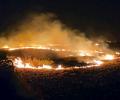
The Supreme Court has expressed concern over the increasing pollution levels during winter and has suggested that the Punjab government arrest farmers who engage in stubble burning. The court believes that this action would send a strong message and help curb air pollution.
Supreme Court Justice M M Sundresh recused himself from hearing the bail plea of advocate Surendra Gadling, an accused in the Elgar Parishad-Maoist links case. The case has been adjourned multiple times.
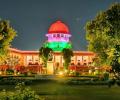
The Supreme Court of India has referred the matter of the Right to Education (RTE) Act's applicability to minority schools to a larger bench for adjudication, expressing concerns about potential misuse and fragmentation of the education system.

The Supreme Court has directed the Centre to explore providing insurance covers to defence cadets who suffer injuries or disabilities during training, emphasizing the need to support these 'braveheart cadets'.

The Supreme Court has granted protection from arrest to The Wire's founding editor Siddharth Varadarajan and Consulting Editor Karan Thapar in connection with an FIR registered by Assam Police over a news article.

The Supreme Court has expressed concerns over student suicides at IIT Kharagpur and Sharda University, directing expedited investigations into the incidents. The court questioned the institutions' handling of mental health issues and compliance with previous directives.
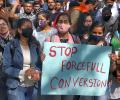
The Centre has appointed a commission headed by former CJI K G Balakrishnan to examine the matter of giving Scheduled Caste status to new people who claim to "historically" have belonged to the Scheduled Castes but have converted to a religion other than those mentioned in the presidential orders.

"Considering the importance of the matter, subject to the order of the Chief Justice of India, the matter be placed for final hearing on July 22," the bench said.

Justice Surya Kant is set to become the 53rd Chief Justice of India, bringing extensive experience and a record of significant verdicts on key issues.
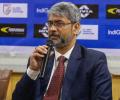
10 ISL clubs slam AIFF for delay in tender process, allege "breach of trust"

'When maximum voter participation occurs, they do not vote to re-elect the incumbent government. They vote to change it.' 'How can anyone credibly suggest that crores of young voters -- particularly the unemployed youth -- would vote to re-elect an existing government that has demonstrably failed them?'

Observing that persons regardless of popularity are equal before the law, the Supreme Court on Thursday cancelled the bail granted to actor Darshan and other accused in the Renukaswamy murder case.
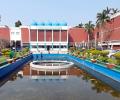
The Supreme Court on Friday deferred the question of Aligarh Muslim University's minority status to a fresh bench and overruled the 1967 judgment that said the university cannot be considered a minority institution since it was created by a central law.

AIFF's RFP: No franchisee fee for clubs in ISL, commercial partner to provide video support system
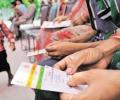
Expressing surprise over political parties not coming forward in filing objections related to 65 lakh excluded voters, the top court directed the chief electoral officer of Bihar to implead them in the court proceedings.
The Supreme Court has suggested that judges of the Jharkhand High Court take leave to write pending judgments, noting a significant backlog of cases where verdicts have not been pronounced.
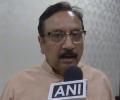
A plea has been filed in the Supreme Court seeking the removal of Madhya Pradesh minister Vijay Shah for his remarks against Indian Army officer Col Sofiya Qureshi. The petition, filed by a Congress leader, alleges Shah's statement sparks separatist feelings and threatens the country's unity.
Universally practiced forms of discrimination and exclusion include social and cultural segregation, expressed in various forms of refusal to have any social interaction; endogamy, expressed through the universal prohibitions on Dalit-non-Dalit marriages and through severe social sanctions on both Dalits and non-Dalits, who break this taboo.'In short, in most social contexts, Dalit Muslims and Dalit Christians are Dalits first and Muslims and Christians only second,' it said.
"The government of today which was in power in 1996 has to be morally committed on the issue," he said.
Muslims and Christians will jointly organise 'adhikar conference' (rights conference) in Patna on July 1 to press the Centre for acceptance of the recommendations of the Sacchar Committee and Ranganathan Committee.

Earlier, two different benches of the apex court had refused to hear the cross-appeals saying that one or the other judges had been linked to the adjudication of the issue before.
The Supreme Court on Monday pulled up Madhya Pradesh minister Kunwar Vijay Shah for not issuing a public apology over his remarks against Indian Army officer Colonel Sofiya Qureshi, saying he is testing the court's patience.

Activist Manoj Jarange vows to intensify his hunger strike for Maratha reservation under OBC, while the Maharashtra government seeks legal opinion on the issue.

The Indian government is making every possible effort to save an Indian nurse facing execution in Yemen for murder, the Centre told the Supreme Court.
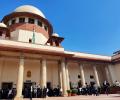
The Supreme Court addressed the issue of probe agencies summoning lawyers for providing legal advice to clients under investigation, emphasising that lawyers should not be summoned merely for offering legal advice but can be if they are assisting in the crime. The court is considering guidelines to prevent investigative overreach and protect lawyer-client privilege.
The Supreme Court has stayed the Calcutta High Court's decision that stalled the implementation of a revised list of Other Backward Classes (OBCs) in West Bengal, providing relief to the state government.
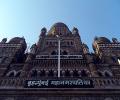
The Supreme Court has directed the Maharashtra state election commission to notify local body elections in the state within four weeks. The court also ruled that the contentious issue of OBC reservation in local body polls will be as it existed prior to the 2022 Banthia Commission report. The court accepted the commission's report, which recommended a census to fix exact data on OBCs and reserve 27 per cent seats for the category in local body polls in Maharashtra. The bench on Tuesday fixed a timeline for concluding the local body polls and asked the state panel to conclude it in four months. The outcome of Maharashtra local body elections would be subject to decisions in pending petitions before the apex court.

Activist Manoj Jarange's hunger strike demanding Maratha quota continues for the third day in Mumbai, following a meeting with a government delegation. The protest has caused traffic disruptions and highlights the ongoing debate over reservation policies in Maharashtra.

The Supreme Court has questioned the line of investigation adopted by the Haryana SIT in the case of an Ashoka University professor booked for social media posts, stating that it "misdirected itself."

The top court also questioned the West Bengal government's decision to hire contractual employees for the protection of doctors and other staff in hospitals.

A 28-year-old student from Nalgonda district was arrested in Hyderabad following his deportation from the United States for allegedly using forged documents to obtain his visa, police said on Wednesday.
 © 2026 Rediff.com - Advertise with us - Disclaimer - Privacy Policy - Sitemap - Feedback - About us - Terms of use - Grievances